BackBlogCarbon-storing concrete at Prinses Alexia Viaduct in the Port of Rotterdam: BAM, Albeton and Paebbl work on civil engineering application
2026-11-19Paebbl
Paebbl Rebond product series is now in the foundation of selected precast concrete walls at the Prinses Alexia Viaduct, replacing 20% of the CEM III/B cement in the concrete mix.
We know that bringing a new material into civil infrastructure means earning the confidence of the people who specify and build it. Lowering embodied carbon matters, and so does understanding how a material fits the requirements of a structure designed for long-term use.
We’re proud to have worked with leading civil engineering company BAM, concrete producer Albeton and the Port of Rotterdam Authority to bring our carbon-storing material into the foundation of selected precast concrete walls at the Prinses Alexia Viaduct. As the client for the project and a partner in this application, the Port of Rotterdam Authority contributed its expertise and experience to make this project a success.
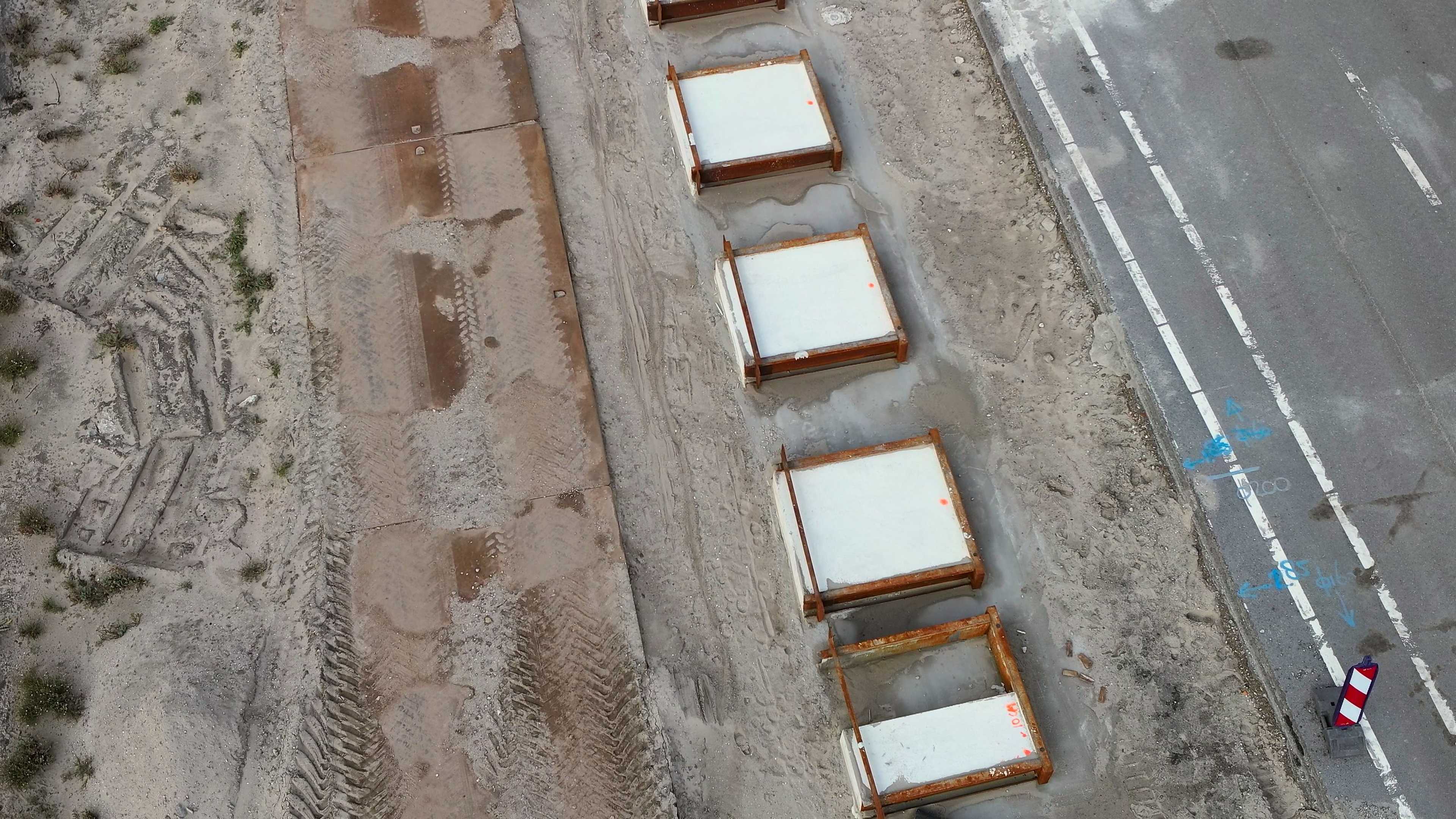
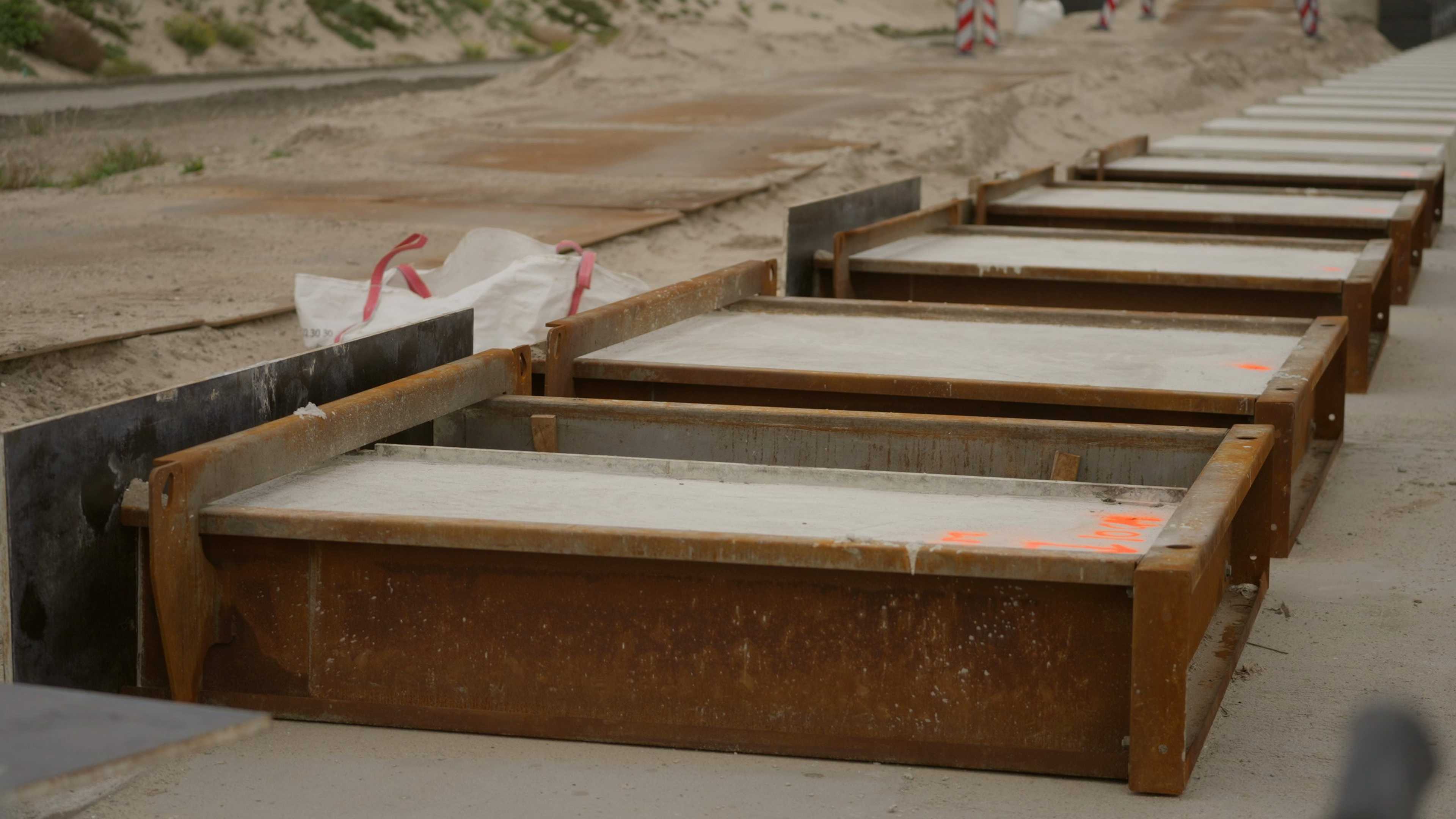
Cast in October 2026, these elements use Paebbl Rebond 200 to replace 20% of the CEM III/B cement. The concrete was developed for the project’s specified strength class of C30/37. The Port of Rotterdam Authority also supported the external testing for this application.
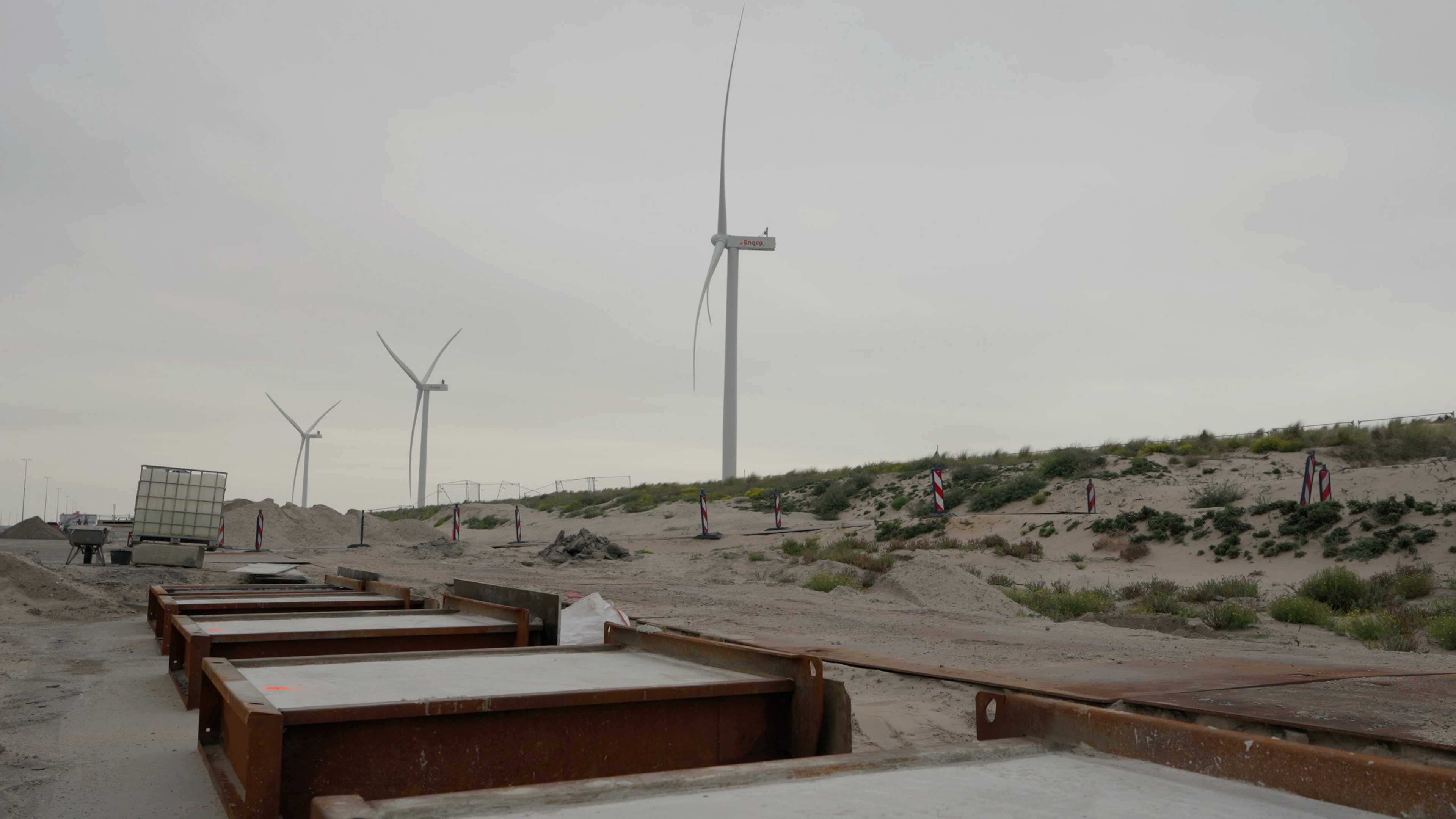
The Prinses Alexia Viaduct project will improve access to the area around the Prinses Alexiahaven, replacing existing level crossings and supporting the port’s continued development. The Port of Rotterdam included sustainability measures in the project tender, and BAM has optimised the design to reduce the quantities of concrete and steel required.
“Infrastructure has to support the port’s development over the long term. We want to reduce the environmental impact of building it and create space for new materials to be assessed in clearly defined applications.”
Willem Gall
Technical Manager, Port of Rotterdam Authority
For projects like this, reducing carbon has to fit the practical demands of civil engineering: meeting strength and durability requirements while coordinating construction around existing infrastructure. Lower-carbon materials can complement efficient design by reducing the footprint of the concrete that is still needed.
“For a contractor, the question is how a new material fits the requirements of the work. Collaboration with the concrete producer and material supplier helps us understand its use in a specific application and what is needed to take that experience into future projects.”
Rob van Berkel
Senior Advisor material technology, BAM
A further reduction from an existing low-carbon mix
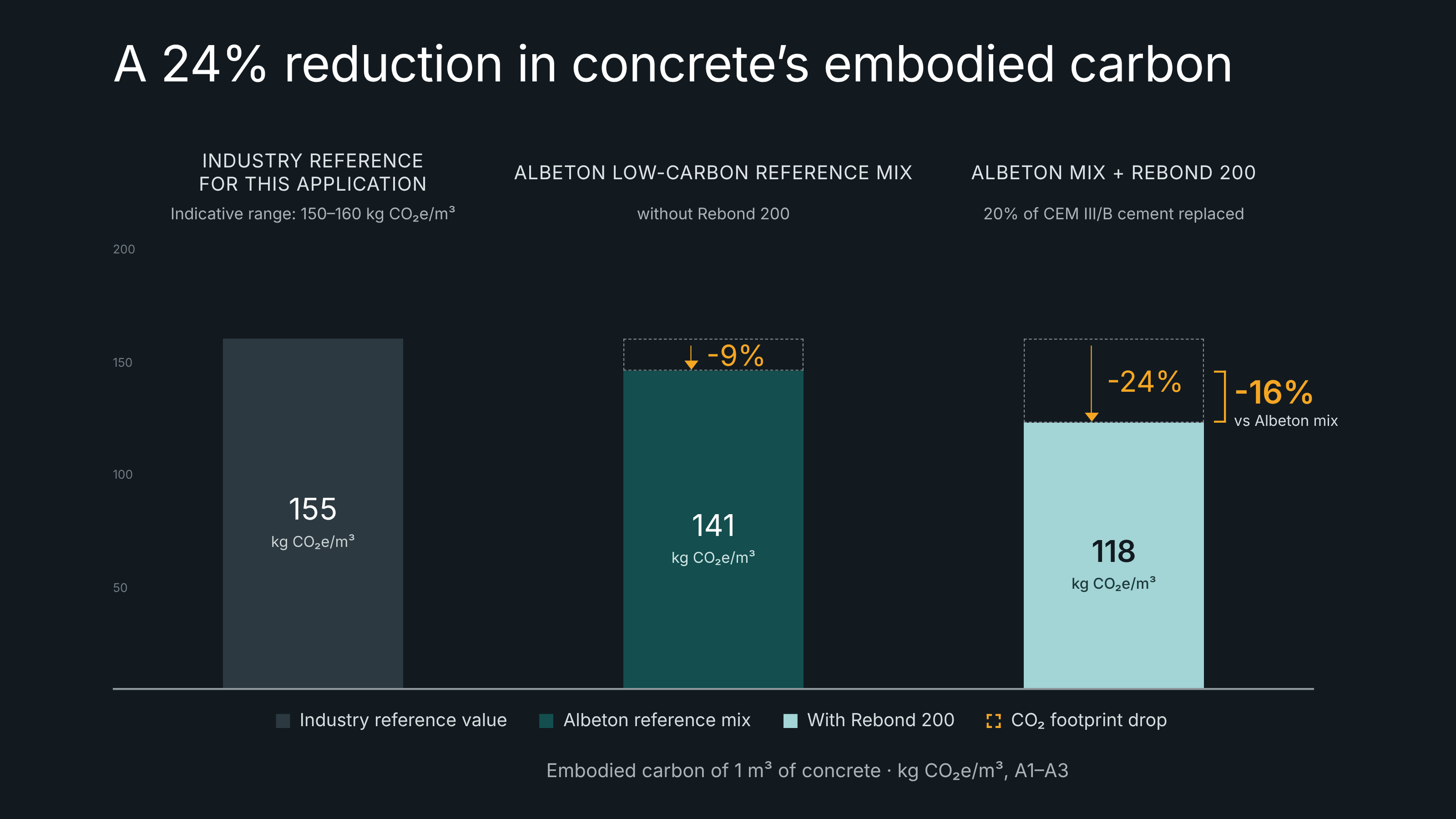
Albeton was already working with a lower-carbon CEM III/B mix. We worked with them to reduce its footprint further by replacing part of the cement with Rebond 200, our first generation of products. Our preliminary carbon assessment estimates a reduction from 141 to 118 kg CO₂e per cubic metre, around 16%, for the production stage of the concrete (A1–A3).
The selected application industry reference used in the comparison is 155 kg CO₂e per cubic metre, the midpoint of the indicative 150–160 kg CO₂e/m³ range. Against that reference the Paebbl and low-carbon Albeton mix is approximately 24% lower. The two comparisons answer different questions: 16% describes the improvement over Albeton’s mix, 24% describes the overall difference from the selected application reference showing what’s possible when the entire concrete mix value chain comes together to reduce embodied carbon.
Carbon stored in the material
We manufacture our material through accelerated mineralisation, binding captured CO₂ into stable mineral form. Used as a partial cement replacement, our Paebbl Rebond series brings carbon storage into concrete applications.
For us, this project adds valuable experience of using our materials in long-term civil infrastructure. Working through a real application together helps us and our partners make better-informed decisions about future projects.
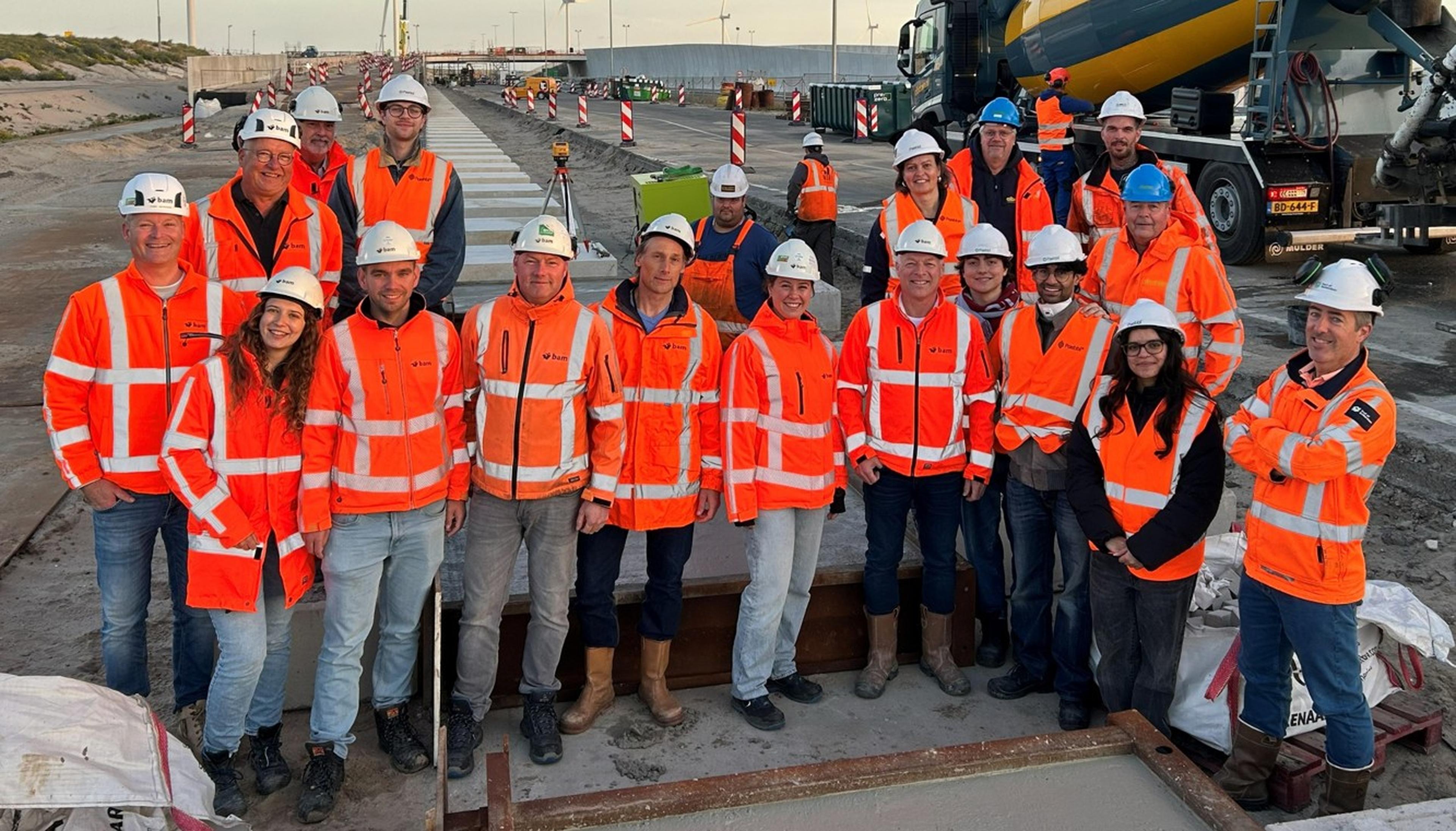
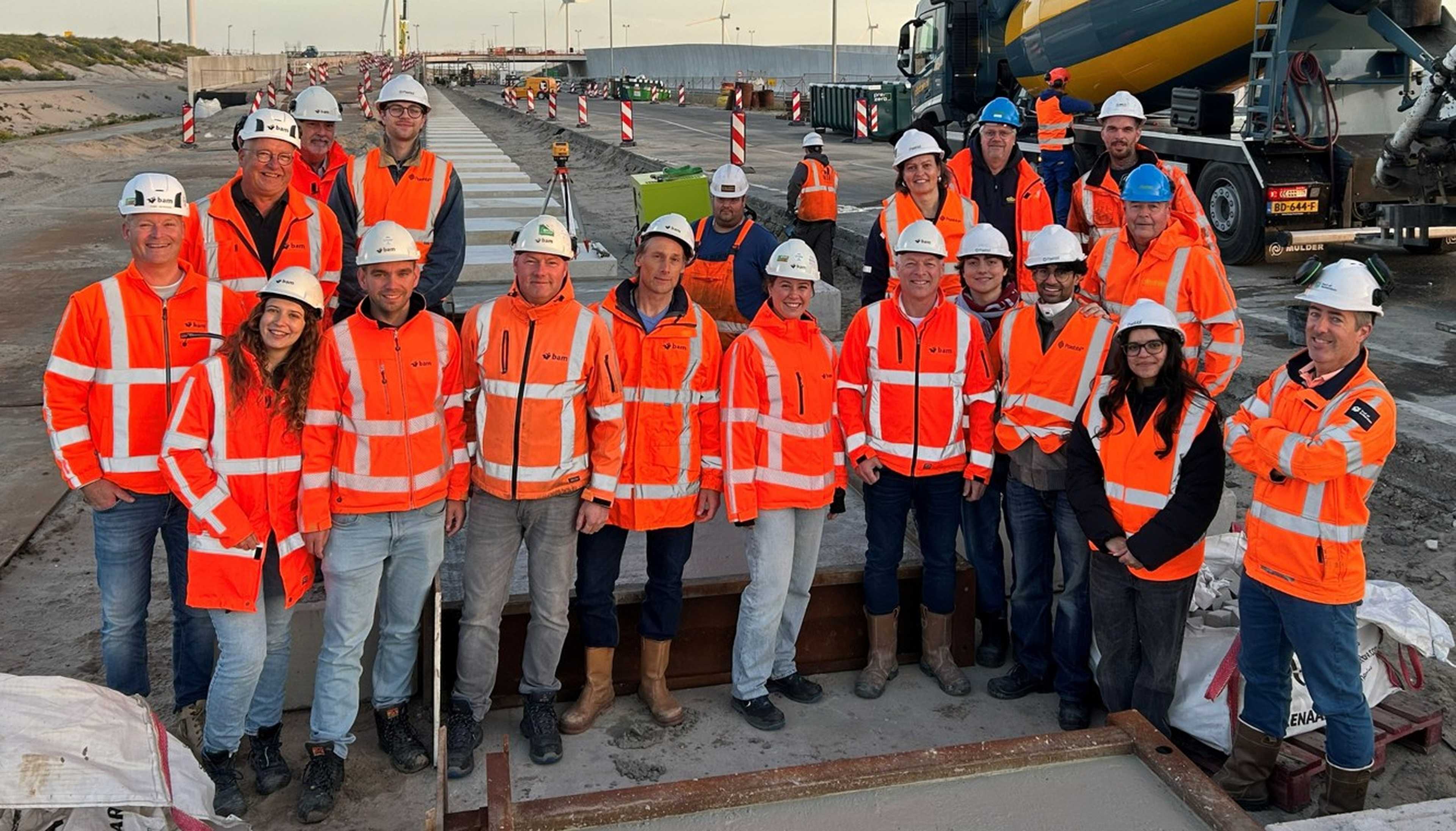
Together on site: the project team at the Prinses Alexia Viaduct, Port of Rotterdam.
Thank you to our project partners BAM, Albeton and the Port of Rotterdam Authority for their collaboration, expertise and support, and for helping bring carbon-storing materials into practice.
More
11/11/2026
Video: Sam Bentley Visits Paebbl in RotterdamTurning CO₂ into stone: Sam Bentley visits our Rotterdam demo plant for his #NewDutch seriesRead more
11/2/2026
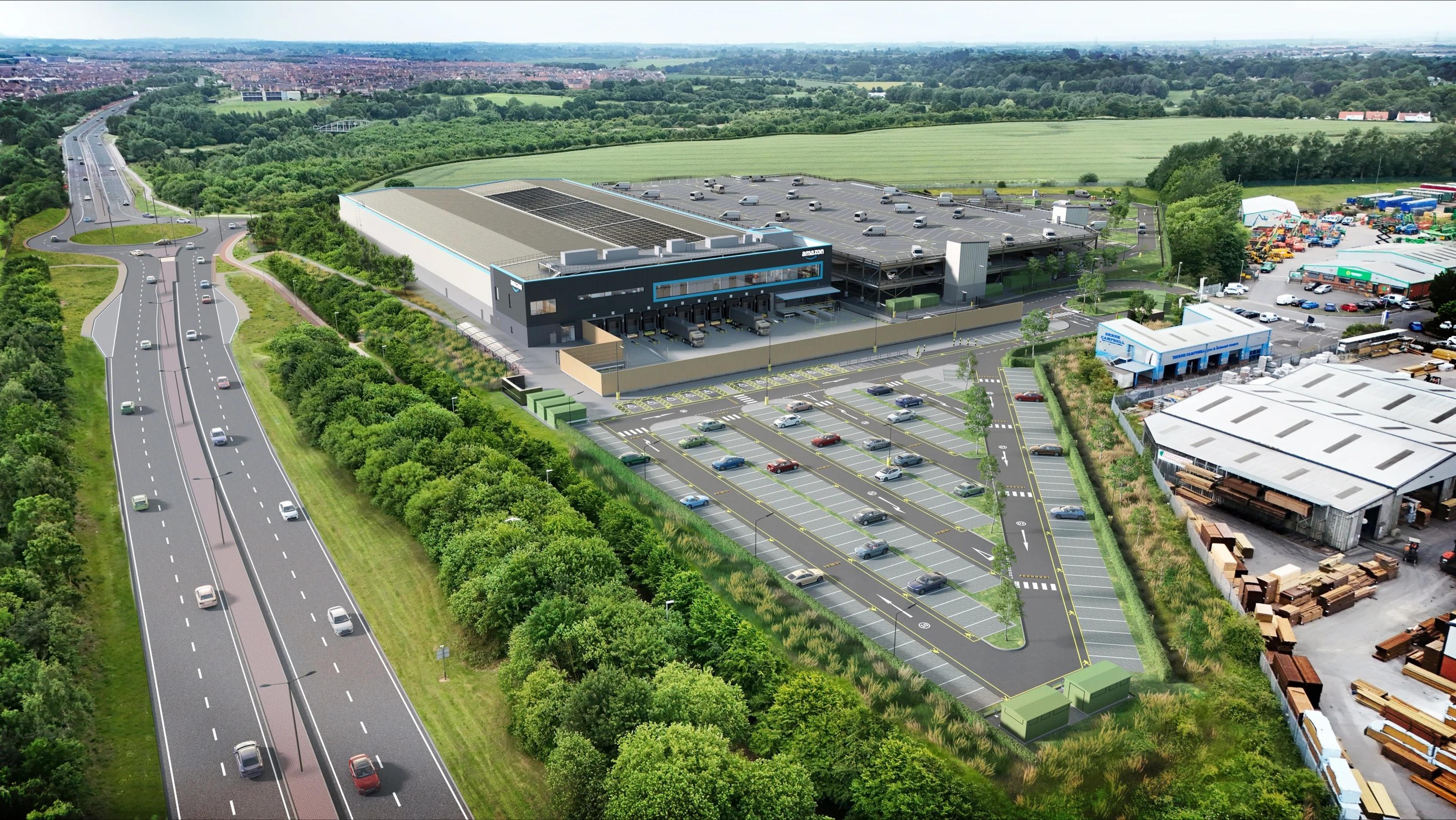
Amazon deploys Paebbl’s carbon-storing material at its new £40m delivery station in Stockton-on-Tees, UKWe’re excited to unveil our latest customer application, bringing Paebbl’s material into a working logistics environment. Amazon recently announced that Paebbl Rebond was used in the service-yard concrete at its newest £40 million delivery station in Stockton-on-Tees, replacing part of the conventional clinker-based cement with Paebbl’s partial cement replacement that stores captured CO₂.Read more
8/24/2026
AGILIS, subsidiary of the NGE Group, and Paebbl announce partnership to cut the carbon footprint of infrastructure concreteAfter more than a year of joint development, the partners have proven that carbon-storing materials perform in one of the industry's most demanding applications, with an embodied carbon reduction of 26% on an unchanged mix design.Read more
8/12/2026
The City of Rotterdam (Gemeente Rotterdam) has awarded Paebbl an €805k grant under Kansen voor West, co-financed by the European UnionThanks to "Path to Commercialisation" we're able to finance extra work sitting between our demo plant facility and our first commercial plant currently being designed for industrial scale. The programme supports research, innovation capacity and the deployment of advanced technologies in the Rotterdam region, where our R&D centre is based.
Read more
8/4/2026
Building an aligned value chain: Paebbl welcomes Prologis Ventures and JLL Foundation as new partners We're excited to share that we've partnered with Prologis Ventures and JLL Foundation to accelerate bringing carbon-storing materials into the built environment at scale. The real estate industry has immense power to shape the energy and carbon efficiency agenda in the built environment. As energy and carbon efficiency become clearer commercial priorities across real estate, scaling a new generation of materials becomes part of building a more resilient and competitive supply chain.
Read more
8/3/2026
Paebbl selected to receive equity investment from the European Innovation Council to scale carbon-storing building materials technologyThe European Innovation Council has selected Paebbl for an equity investment under its highly competitive STEP Scale Up programme. Paebbl is one of the six European deep-tech companies in this round, across which the EIC Fund has committed a €97 million investment. We are honoured to be the first construction materials technology company to be selected for the STEP Scale Up programme, signalling that Europe is proactively investing into creating a more resilient supply chain of building materials.Read more
6/25/2026
Paebbl Rebond 300We're excited to launch Rebond 300, the world’s first carbon-negative construction material with an EPD-verified footprint of -149 kg CO₂ per tonne. It marks the latest addition to our Rebond series of carbon-negative construction materials, representing a 10x improvement in net carbon performance compared to our first-generation product. Every tonne of material we produce now removes significantly more CO₂ from the atmosphere than is emitted during its entire production process.Read more
4/23/2026
Carbon removal certification needs to catch up with carbon-storing scienceIn February 2026, we participated in the European Commission's CRCF (Carbon Removals and Carbon Farming) workshop on direct ocean carbon capture and storage (DOCCS) and mineral carbonation in Brussels. Alongside other stakeholders, we were invited to provide feedback on two review papers that will shape the next phase of how Europe certifies carbon removals.
We submitted a detailed position paper to the Commission, and this blog post below sets out the substance of what we said - for full transparency.Read more
4/7/2026
Paebbl welcomes ex-Tesla and Novo Energy Fernando Sosa as FOAK CEOPaebbl is excited to announce that the scale-up expert Fernando Sosa has joined our executive team as FOAK CEO, leading the design, engineering, and delivery of Paebbl's first-of-a-kind commercial-scale facility. This is the next critical step in scaling our technology from our Rotterdam R&D demo plant to industrial production.Read more
1/28/2026
Paebbl awarded €4 million grant to lead European consortium developing next-generation carbon-storing cement binders We’re excited to announce today we have been awarded €4 million in research funding from the European Innovation Council (EIC) Pathfinder Challenges 2024. The grant will support the creation of C-SINC, a four-year programme to develop innovative cement binders that turn even structural concrete from a major carbon emitter into a carbon sink. Read more
1/21/2026
Unveiling the world's first carbon-neutral concrete bridge with HeijmansWe've unveiled the world's first bridge with CO₂-neutral concrete with Heijmans, one of the Netherlands' leading construction and infrastructure companies. Our carbon-storing material combined with biochar and recycled aggregates from other partners.Read more
11/20/2025
Paebbl reaches 2,500 hours of operations: the learning velocity behind our carbon-storing building materialsThe construction industry needs affordable, low-carbon materials. At Paebbl, we’re delivering just that with a new production process using captured CO₂ as a feedstock. Inspired by how nature builds, we turn that CO₂ into carbon-storing cementitious materials for the market.Read more
11/6/2025
Video: Bloomberg’s Inventions That Could Help Heal the PlanetInventions That Could Help Heal the Planet: Behind Bloomberg’s Lens on PaebblRead more
7/29/2025
Unveiling Carbon-Storing Flooring Solution for Fashion House MARC-ANTOINE BARROISWe have joined forces with Design & Beton, a decorative concrete contractor, to deliver an interior floor for Marc-Antoine Barrois’ latest boutique in Paris, France.
Marc-Antoine Barrois is a luxury fashion house that provides an array of accessories, perfumes and clothing.
Read more
7/10/2025
Paebbl welcomes Alex Patist as fractional Chief Operations Officer We’re excited to announce that our long time advisor Alex Patist is stepping up as fractional COO as part of our operations scale up phase. This move will help us industrialise our operations as we're moving towards 24/7 operations, storing up to 500 tonnes of CO₂ per year.Read more
6/13/2025
Paebbl welcomes three expert advisorsWe’re excited to announce that we have formally brought on three advisors as part of our talent partnering strategy. This move reinforces our commitment to partner with world-class talent to accelerate our mission of building industrial-scale future-proofed materials.Read more
6/10/2025
Unveiling Carbon-Storing Harbour Infrastructure with HakkersWe worked with Hakkers, a leading Dutch construction and engineering firm, to release this project at the Port of Rotterdam that significantly reduces the environmental impact of maritime anchoring in a world's first. By substituting part of the traditional cement content in the anchoring mix with Paebbl’s product, we are setting a new standard for climate friendly infrastructure. Read more
4/17/2025
Paebbl starts operating its continuous demo plant, a world-first for CO₂ mineralisationWe’re pleased to announce the next phase of scaling up of our operations, with the successful launch of our demo plant, which has been operating continuously since late March 2025. The project was completed in just under 18 months.Read more
10/9/2024
We've raised $25m to supercharge CO₂ storage in the built environmentWe are happy to announce the successful close of our Series A of $25m. This new capital will accelerate our technology scale-up and connect the value chain for CO₂ storage in building materials, positioning the built environment as a key player in combating climate change.Read more