
10/2026
casting date
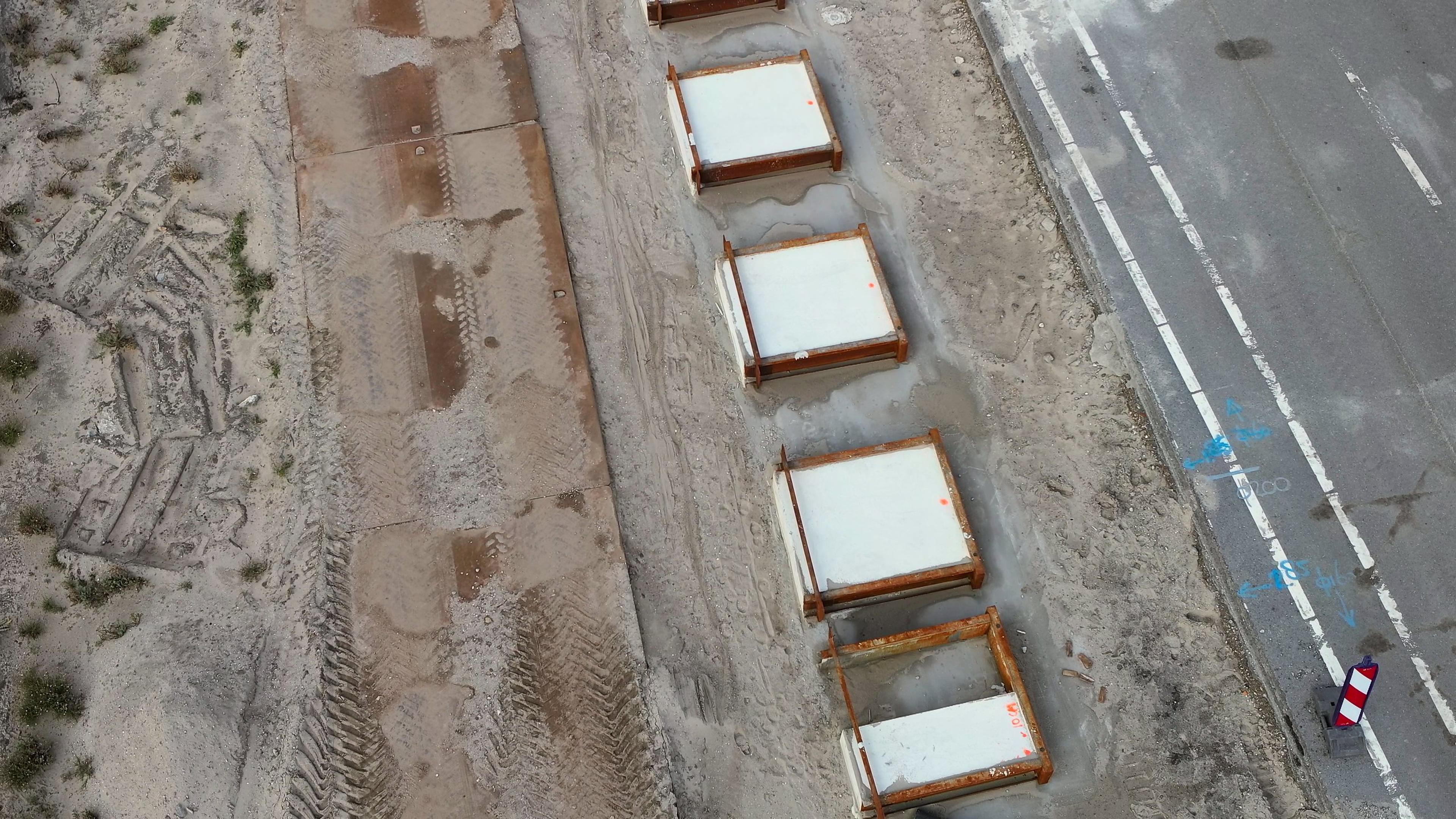
Working with BAM, Albeton and the Port of Rotterdam Authority, we brought Paebbl Rebond 200 into the foundation of selected precast concrete walls at the Prinses Alexia Viaduct, replacing 20% of the CEM III/B cement.
Working with BAM, Albeton and the Port of Rotterdam Authority, we brought Paebbl Rebond 200 into the foundation of selected precast concrete walls at the Prinses Alexia Viaduct, replacing 20% of the CEM III/B cement.
“Infrastructure has to support the port’s development over the long term. We want to reduce the environmental impact of building it and create space for new materials to be assessed in clearly defined applications.”
Customer context
The Prinses Alexia Viaduct project will improve access to the area around the Prinses Alexiahaven in the Port of Rotterdam, replacing existing level crossings and supporting the port’s continued development.
The Port of Rotterdam Authority, the client for the project, included sustainability measures in the project tender, and BAM has optimised the design to reduce the quantities of concrete and steel required.
The partners
Port of Rotterdam Authority: client for the project and a partner in this application. It contributed its expertise and experience and supported the external testing for this application.
BAM: the civil engineering contractor, which optimised the design to reduce the quantities of concrete and steel required.
Albeton: the concrete producer, whose lower-carbon CEM III/B mix was the starting point for this application.
Paebbl: supplier of Paebbl Rebond 200, our first generation of carbon-storing material, used here to replace 20% of the CEM III/B cement.
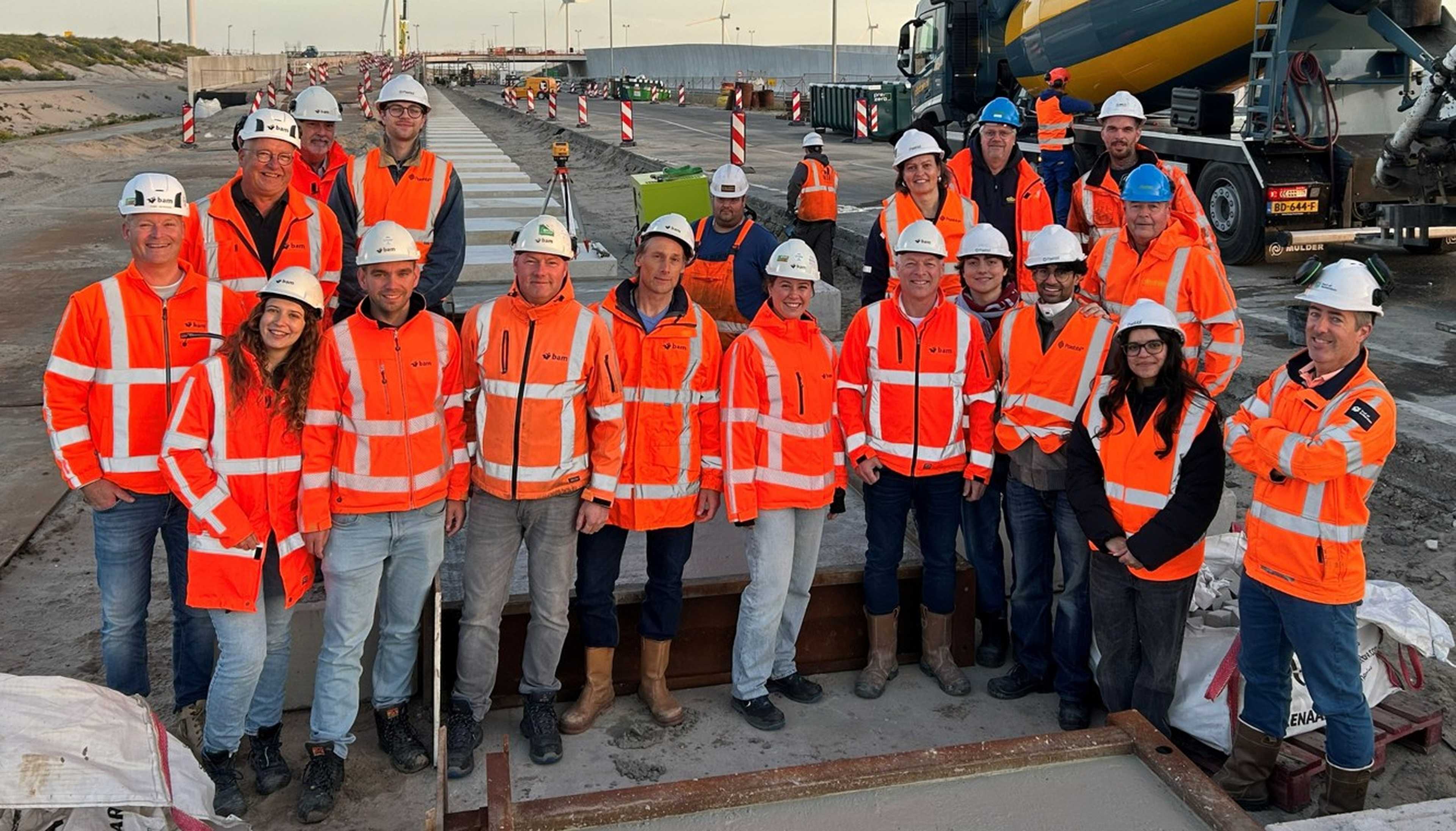
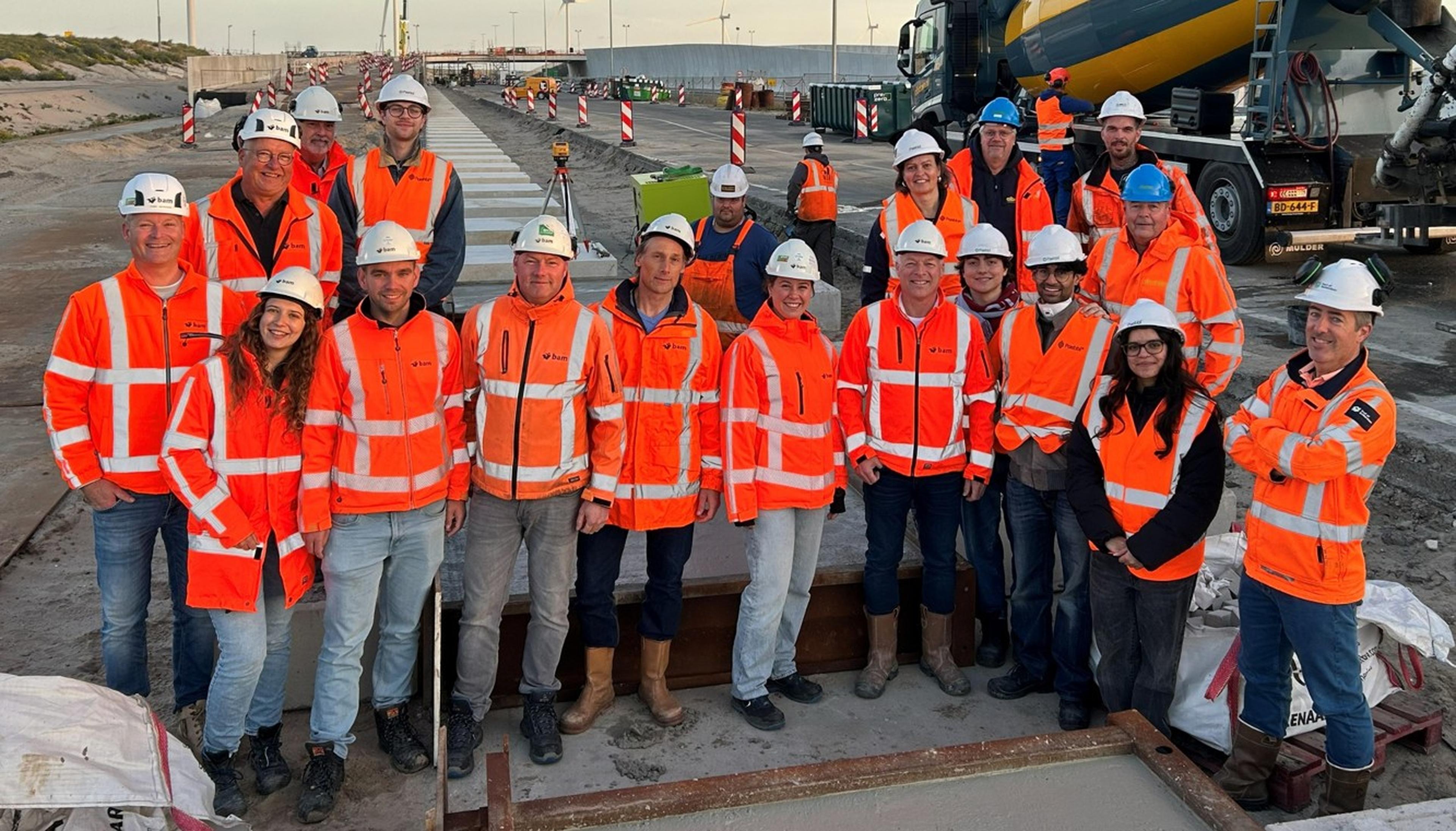
Together on site: the project team at the Prinses Alexia Viaduct, Port of Rotterdam.
The challenge
Bringing a new material into civil infrastructure means earning the confidence of the people who specify and build it. Lowering embodied carbon matters, and so does understanding how a material fits the requirements of a structure designed for long-term use.
For projects like this, reducing carbon has to fit the practical demands of civil engineering: meeting strength and durability requirements while coordinating construction around existing infrastructure. Lower-carbon materials can complement efficient design by reducing the footprint of the concrete that is still needed.
“For a contractor, the question is how a new material fits the requirements of the work. Collaboration with the concrete producer and material supplier helps us understand its use in a specific application and what is needed to take that experience into future projects.”
Our approach
Albeton was already working with a lower-carbon CEM III/B mix. We worked with them to reduce its footprint further by replacing part of the cement with Rebond 200, our first generation of products.
Cast in October 2026, the foundation elements of selected precast concrete walls use Paebbl Rebond 200 to replace 20% of the CEM III/B cement. The concrete was developed for the project’s specified strength class of C30/37, and the Port of Rotterdam Authority supported the external testing for this application.
The results
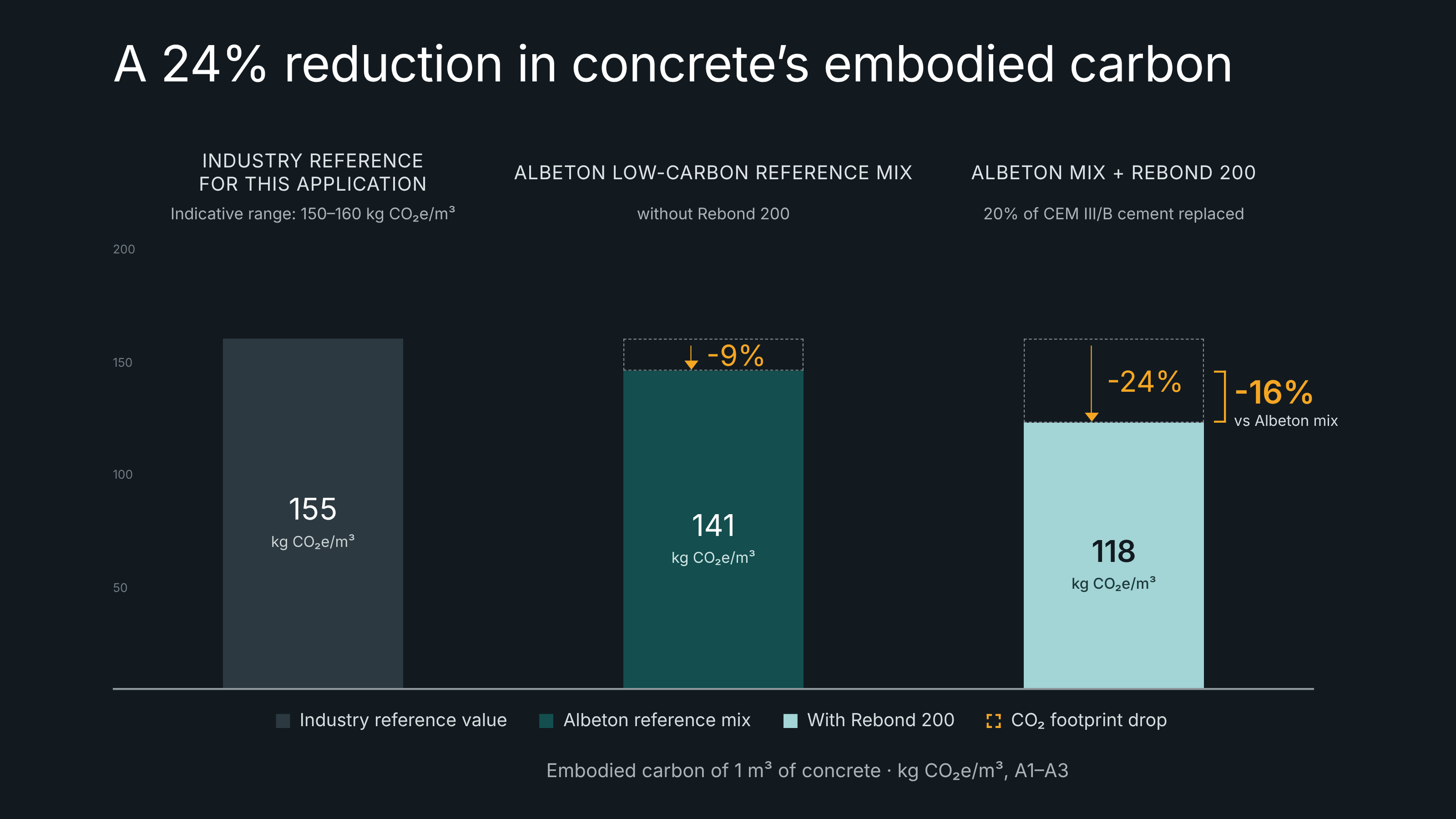
Our preliminary carbon assessment estimates a reduction from 141 to 118 kg CO₂e per cubic metre, around 16%, for the production stage of the concrete (A1–A3).
The selected application industry reference used in the comparison is 155 kg CO₂e per cubic metre, the midpoint of the indicative 150–160 kg CO₂e/m³ range. Against that reference the Paebbl and low-carbon Albeton mix is approximately 24% lower.
The two comparisons answer different questions: 16% describes the improvement over Albeton’s mix, 24% describes the overall difference from the selected application reference, showing what’s possible when the entire concrete mix value chain comes together to reduce embodied carbon.
Looking ahead
For us, this project adds valuable experience of using our materials in long-term civil infrastructure. Working through a real application together helps us and our partners make better-informed decisions about future projects.
Thank you to our project partners BAM, Albeton and the Port of Rotterdam Authority for their collaboration, expertise and support, and for helping bring carbon-storing materials into practice.
Photo gallery